I’m an avid videographer and just as I enjoy creating static graphics for print and digital use, I also enjoy moving graphics around to enhance a message, keep engagement, and deliver information in a way that the viewer will truly retain.
World Aids Day animation, created in Adobe Animate and Premiere. Music created with FL Studio and Sony Acid. One of my coworkers did the voiceover using one of my mics attached to a laptop in a quiet storage room.
HIV test, positive scenario (we also did a negative scenario, available upon request). I recorded this with four cameras (two static and one hand-held). On the intro, I created the music in FL Studio, and also piloted the drone for the recording of Crescent Care in New Orleans.
Louisiana Connect introductory video, a blend of screen recording, synchronization, and in some cases animating image assets so look like screen recordings. I started with a voiceover, then edited and animated to the audio. Created using Adobe’s Animate, Premiere, After Effects, and Photoshop.
Neural Radiance Fields (NeRFS) with some of the process edited to music (music by Ween). NeRFS are similar to photogrammetry in that they appear to interpret a 3D environment, there is nothing real in the rendering of NeRFS video-like flythroughs. These were created by scanning at 4K using iPhones (mounted onto a one hand grip) and a DJI cinematic drone.
Louisiana Systemic Initiatives Program (LaSIP). A combination of motion graphics and animation synched to my voiceover.
Related:
Before Adobe created Animate, the software was known as Flash, created by Macromedia (they were purchased by Adobe). Flash MX was the first version of this software capable of importing video. I was already a prolific Flash user and video editor, and as an early adopter I was approached to write a chapter based on a video I’d created that went viral in the Flash development community. I wrote chapter two, “Mixing Animated Vectors with Video,” and my working files are included in a CD attached to the inside of the book.
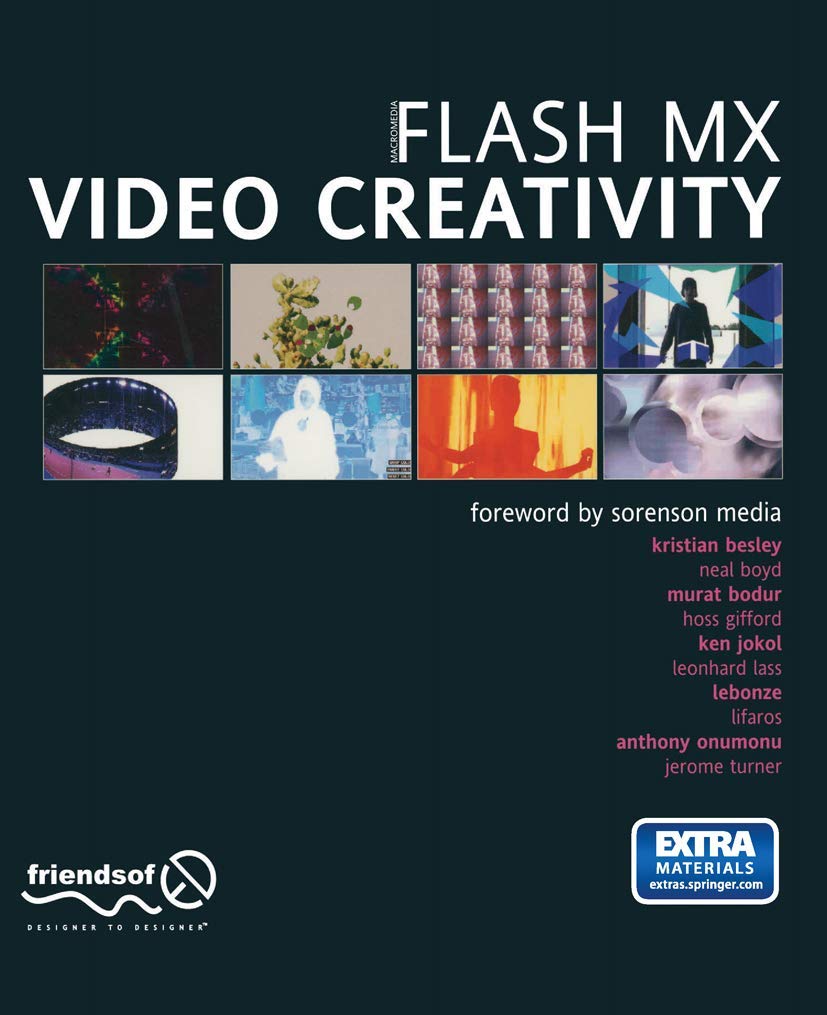
Mixing Animated Vectors with Video